Adobe’s acquisition of Semrush isn’t just a corporate power move. It marks a shift in how marketing platforms are built and who they’re built for. If your small business SEO strategy is still treated like a side project, it’s time to reassess.
This deal affects more than pricing and features. It changes the competitive landscape for marketing tools and raises new questions about access, speed, and innovation. Business owners who rely on platforms like Semrush need to think ahead.
Here are the business-level impacts you should be thinking about now.
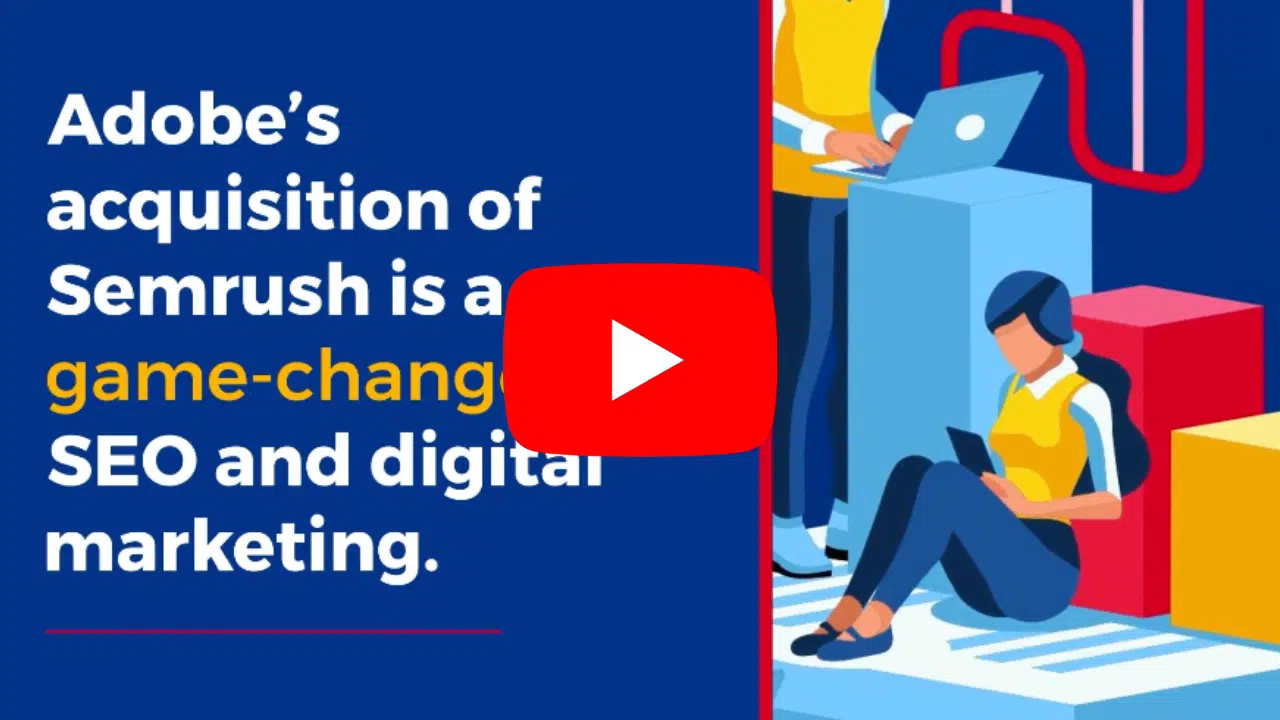
Prefer a quick summary? Hit play to watch.
Key Takeaways
- This shift demonstrates how rapidly SEO is evolving and why staying adaptable with your tools and strategy is crucial.
- Adobe’s acquisition of Semrush is more than a headline; it signals that search data now drives how companies compete.
- The future of SEO won’t focus solely on keywords, but rather on how search connects to AI, content, and customer behavior.
SEO Moves From Tactic To Infrastructure
Adobe’s acquisition of Semrush marks a major shift in digital strategy. Bringing creative tools and SEO data under one roof gives marketers a new kind of workflow. This move could help teams plan, create, and adjust content more efficiently without having to switch between platforms.
Marketers use Adobe to design and produce content that looks sharp and professional. Semrush provides the search insights necessary to ensure that content reaches the intended audience. Merging these tools creates a faster and more focused way to build online visibility.
Search data could now appear during the content creation process, not after. Designers might adjust headlines or copy based on real-time keyword info. Teams would spend less time guessing and more time producing work that performs.
Enterprise Tools Are Eating the Middle Market
Large software companies are shifting their focus toward big clients with large budgets. Adobe’s move to acquire Semrush signals a push into enterprise-level marketing. Smaller companies might see fewer features or higher costs as a result.
Many lean teams depend on tools that are simple, affordable, and built for speed. As platforms expand to serve complex needs, those smaller users get left behind. The middle market is shrinking as more tools chase high-paying customers.
Smart businesses should take a closer look at their SEO strategy and overall tech stack. Flexible, low-friction tools will become harder to find. Making adjustments now helps avoid disruption as the market shifts.
Is SEO Still Worth in the Age of AI Search?
Yes, SEO is still worth it in the age of AI search. Adobe’s move toward Semrush demonstrates the significant value they place on real-time search intent. Brands gain an edge when they understand what people and AI tools look for in each moment.
Search behavior remains a strong signal of customer demand. Adobe is making a clear bet on data that tracks how users think and choose. Marketers who follow that shift stay relevant as search continues to evolve.
Is your search presence ready for this new landscape? Get help from the digital marketing professionals at Small Business SEO to future-proof your SEO strategy.
Data Ownership Now Decides Reach
Owning marketing data now shapes how far your message goes. Adobe isn’t buying Semrush for its dashboards, templates, or tools. They want the raw search data behind it.
Control Over Search Trends
Brands that own keyword and SERP trend data can predict shifts in demand before competitors see them. This enables them to publish content that ranks high and remains visible for a longer period. Without this insight, smaller teams fall behind and miss valuable timing.
Powering Content Scoring and Forecasting
Adobe will likely use Semrush’s data inside its AI tools to improve content scoring. This could help predict performance before anything is published. Without similar data, other teams risk wasting time on the wrong campaigns.
Personalization at Scale
Personalization depends on knowing what people search and how they behave after clicking. Semrush provides Adobe with access to in-depth behavioral patterns tied to genuine intent. That advantage will give large companies more control across owned, earned, and paid channels.
AEO Is Now Boardroom Vocabulary
Executives are shifting their focus toward how their brands appear in AI-generated answers. SEO is no longer seen as a technical task handled in the background. It’s now part of how companies plan for growth and visibility.
Adobe’s deal with Semrush shows that Answer engine optimization is getting boardroom attention. AI search has changed the way people find information and make decisions. That change has turned AEO into a serious line item in marketing budgets.
Demand Planning Just Got Smarter
Marketing teams can now use rising search patterns to plan ahead with more confidence. Semrush shows what topics are gaining interest before they become trends. That kind of insight helps teams stay ahead instead of reacting late.
Adobe will likely add this data to its tools for campaign planning. This would help both paid and organic teams choose more effective timing and messages. Launches and promotions can match what people are already starting to search for.
Stronger demand signals also support a sharper SEO strategy. Knowing what people care about makes it easier to plan content that gets attention and ranks. It also reduces waste in campaigns that miss the mark or land too late.
Expect a Consolidation Wave
Large tech companies are starting to compete for the tools that shape how people find and choose businesses. After Adobe’s big move, others will likely follow with deals of their own. The focus is shifting toward platforms that help drive sales, not just clicks.
Business owners should expect changes in the tools they use daily. Software with built-in search data, customer insights, or smart automation will become increasingly difficult to access as major players acquire them. These platforms are becoming part of larger systems that primarily serve large companies.
Running your business with disconnected apps will get more frustrating. Owners will need platforms that tie search, content, and outreach into one place. Staying visible and competitive will depend on choosing tools that grow with your goals.

AI-Search Shifts Will Accelerate
Adobe isn’t buying Semrush for what used to work in traditional SEO. They see it as a live feed of what people want and how AI systems adjust to that demand. This signals a future where rankings shift more rapidly and content is judged in real time.
The impact on business visibility will grow quickly across several key areas:
- Search Results Will Change Faster: AI will update what it shows based on new search patterns, not slow algorithm cycles. That puts more weight on content timing and search intent.
- Content Scoring Will Get Stricter: AI tools will filter content by how well it fits current user needs. Pages that miss the mark may never get seen, even if they’re well-written.
- Answer Engines Will Prefer Trusted Sources: Search platforms will highlight results from sites that show authority and consistency. Without that trust signal, it gets harder for new content to appear.
- SEO Strategy Will Need Daily Attention: Business owners will need tools that track live query trends and performance signals. Waiting weeks for updates could mean missed opportunities.
Staying visible will depend on how quickly you adjust your content to match what AI systems now value.
You Can’t Deny the Importance of a Small Business SEO Strategy
Adobe’s acquisition of Semrush makes one thing clear: search drives real business results. If you’re rethinking how your brand presents itself online, now is the time to take action. Contact the team at Small Business SEO to build a digital marketing strategy that is ready for what comes next.
Frequently Asked Questions
How does Adobe buying Semrush change the direction of SEO?
It pushes SEO further into the enterprise and AI-driven space, making it less about tactics and more about full data integration. This shifts the focus from keyword hacks to long-term visibility strategies.
Will this deal affect how SEO is measured and reported?
Yes, especially as Adobe blends Semrush data with its analytics and content tools. Expect more emphasis on predictive insights and performance tied to broader digital outcomes.
Does this mean traditional SEO is becoming less important?
Not less important, but the definition of SEO is evolving fast. Success now depends on how well your strategy fits with AI search and changing user behavior.
What impact does this have on SEO tools and competition?
It could speed up consolidation, with fewer standalone SEO tools and more platforms locked into big tech ecosystems. This may limit flexibility for smaller teams and create pricing pressure.
How should businesses adjust their SEO strategy after this?
They should focus on long-term visibility, structured data, and adaptability to AI-generated search results. Businesses that react early will have an edge as the rules keep changing.

By, Peter Roesler, President of Small Business SEO. 25+ years in marketing! Yippee.
[ How to Beat Everyone, Take Everything, and Print Money at Will (PDF) ]
[ 2026 AI Gold Rush RANK, SCALE, & WIN YOUR MARKET (PDF) ]
Social
@theSEOGodfather | linktr.ee/mrpeteroesler